March 2026domus
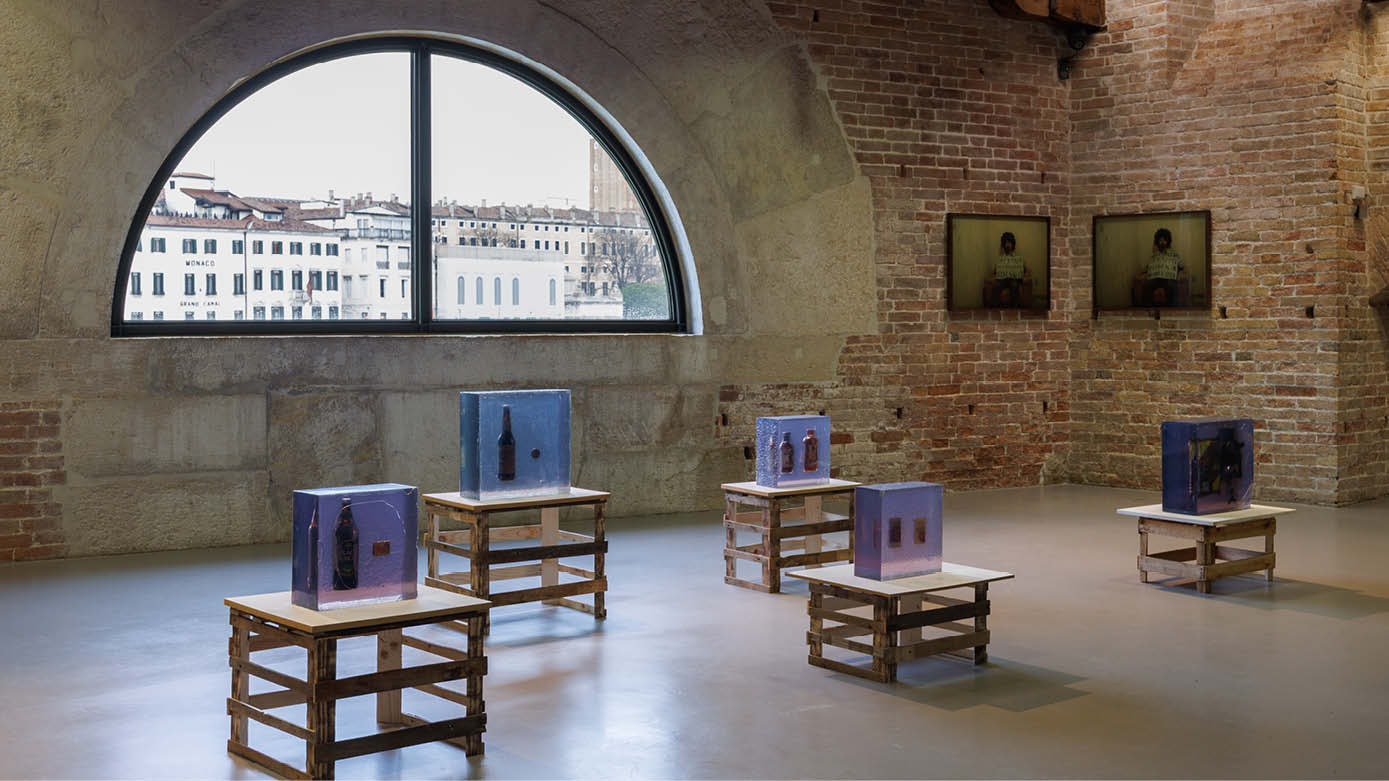
Alessia Baranello traces Nazareth's interventionist practice, reflecting on the colonial histories and migratory patterns within Algebra, his first institutional exhibition in Italy at Punta della Dogana.
Ocula, May 2026'At a time when lives are governed by algorithms, Nazareth’s work proposes a different perspective: an openness to variables and interconnectivity rather than linearity and algorithmic absolutes.' writes Camila Belchior
'At a time when lives are governed by algorithms, Nazareth’s work proposes a different perspective: an openness to variables and interconnectivity rather than linearity and algorithmic absolutes.' writes Camila Belchior
Terremoto, 2 February 2025'Nazareth demonstrates that an activity that may seem ordinary to some, such as walking, can still be used to point to the past and give meaning to the present', writes Mari Carmen Barrios Giordano in response to Luzia, Paulo Nazareth's solo exhibition at Museo Tamayo.
'Nazareth demonstrates that an activity that may seem ordinary to some, such as walking, can still be used to point to the past and give meaning to the present', writes Mari Carmen Barrios Giordano in response to Luzia, Paulo Nazareth's solo exhibition at Museo Tamayo.
Art Agenda, May 2022'Nazareth’s critique demonstrates how the culture industries are at the vanguard of hyper-commodification of anything and everything', writes Oliver Basciano on Vuadora the artist's overview exhibition at Pivô, São Paulo.
'Nazareth’s critique demonstrates how the culture industries are at the vanguard of hyper-commodification of anything and everything', writes Oliver Basciano on Vuadora the artist's overview exhibition at Pivô, São Paulo.
Contemporary And América Latina, July 2019'In his first U.S. retrospective, the Brazilian artist offers a journey to understand the oppressive, exploitative nature of colonial history in his country: his subjects are neither good nor bad, just forgotten' writes Nicole Martinez on Melee at the the Institute of Contemporary Art, Miami.
'In his first U.S. retrospective, the Brazilian artist offers a journey to understand the oppressive, exploitative nature of colonial history in his country: his subjects are neither good nor bad, just forgotten' writes Nicole Martinez on Melee at the the Institute of Contemporary Art, Miami.
Burnaway, July 2019'Like his contemporaries Rosana Paulino and Jaime Lauriano, Nazareth belongs to a cadre of Afro-Brazilian artists who treat Brazilian history as an object of sustained and rigorous scrutiny. Their work revisits violent episodes in their country’s past, grapples with archives and the aftereffects of colonialism, and interrogates the marginal social status of exploited people' writes Ade J. Omotosho in light of Paulo Nazareth's solo exhibition at the Institute of Contemporary Art, Miami.
'Like his contemporaries Rosana Paulino and Jaime Lauriano, Nazareth belongs to a cadre of Afro-Brazilian artists who treat Brazilian history as an object of sustained and rigorous scrutiny. Their work revisits violent episodes in their country’s past, grapples with archives and the aftereffects of colonialism, and interrogates the marginal social status of exploited people' writes Ade J. Omotosho in light of Paulo Nazareth's solo exhibition at the Institute of Contemporary Art, Miami.
Africanah.org, October 2015As other artists and scholars have targeted ethnographical museums effectively, questioning their colonial heritage, Nazareth adds elements of his personal history to the discourse, writes Machteld Leij
As other artists and scholars have targeted ethnographical museums effectively, questioning their colonial heritage, Nazareth adds elements of his personal history to the discourse, writes Machteld Leij
Frieze magazine, March 2015Gideon Lewis-Kraus traces the transcontinental journeys of Brazilian artist Paolo Nazareth
Gideon Lewis-Kraus traces the transcontinental journeys of Brazilian artist Paolo Nazareth
Download Bibliography (PDF)